Trump and Xi Discuss Trade, Tech, Taiwan and AI — Summit Ends Without Breakthrough
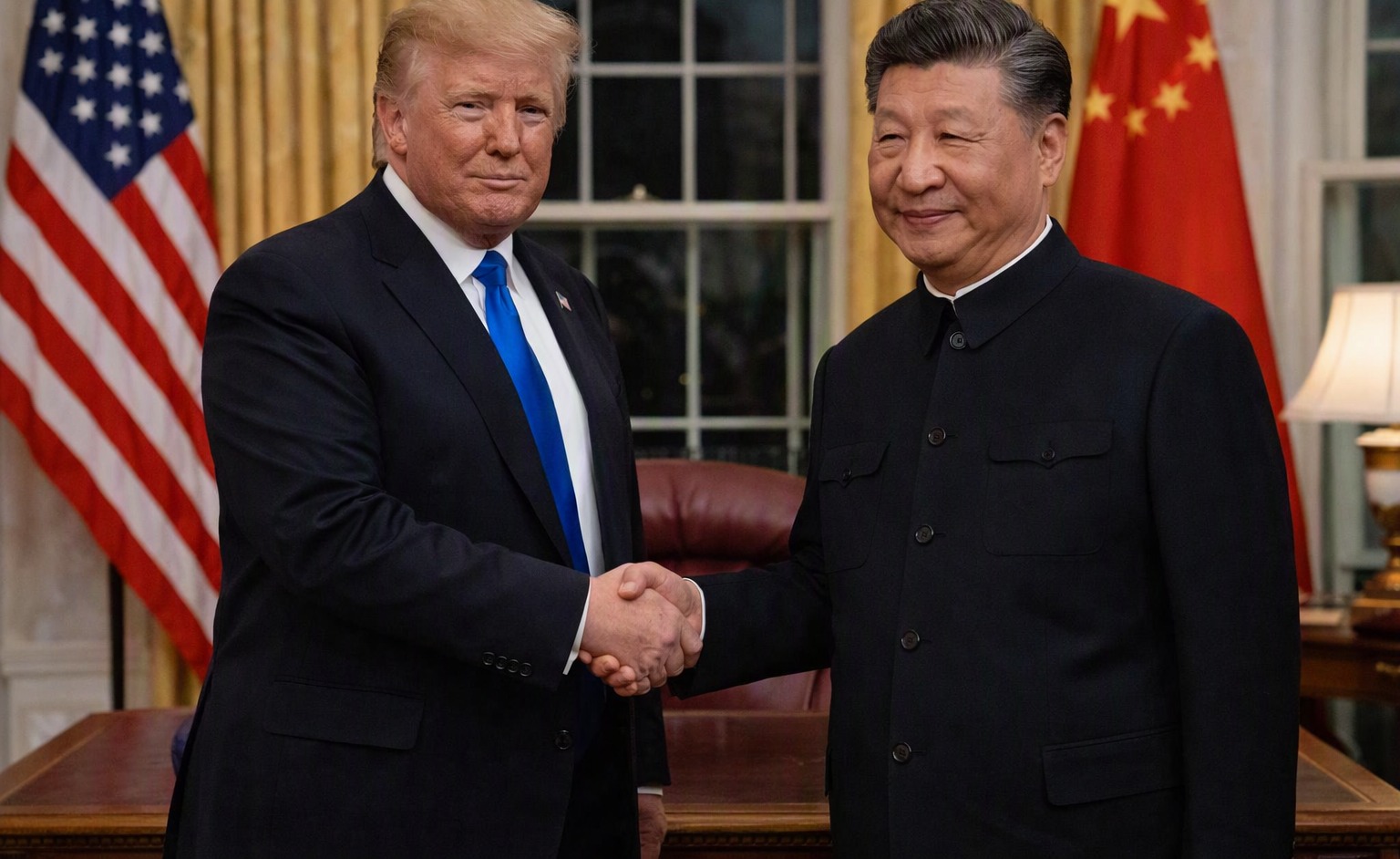
In a day of high‑stakes diplomacy, US President Donald Trump and Chinese President Xi Jinping met in the Oval Office to reshape the narrative of global power competition. The meeting, filled with ceremony and symbolism, produced no joint statement or concrete agreements — only cautious optimism and a promise to keep talking.
Xi’s arrival on 24 September 2026 marked his first state visit to Washington in over a decade. Trump personally greeted him at Joint Base Andrews, an unusual gesture underscoring the summit’s importance. The two leaders held three hours of closed‑door talks, followed by a lavish state dinner attended by top tech executives.
Despite the grandeur, the summit yielded few tangible results. The trade truce between the two nations was extended by just two months, until 10 January 2027, and discussions on semiconductors, rare‑earth minerals, and AI governance ended without consensus.
Xi reiterated China’s firm stance on Taiwan, urging the US to “act prudently” and halt arms sales. Trump, who previously paused a $14 billion weapons package, offered no public commitments.
On technology, both sides agreed to establish a US‑China Super Intelligence Dialogue — a new platform to discuss AI safety and innovation. They also announced a hotline for tech emergencies, aimed at preventing misunderstandings that could escalate into national‑security crises.
Symbolic gestures dominated the day: Xi gifted two giant pandas to a US zoo, while Trump invited 100,000 American students to study in China. Yet, the absence of a joint communiqué underscored the enduring complexity of US‑China relations.
In the end, the summit was rich in spectacle but light on substance — a reminder that the world’s two largest economies are not resetting their relationship, merely managing it with caution and calculation.