Iran Says Foreign Policy Will Remain Unchanged Despite Renewed US War Threats
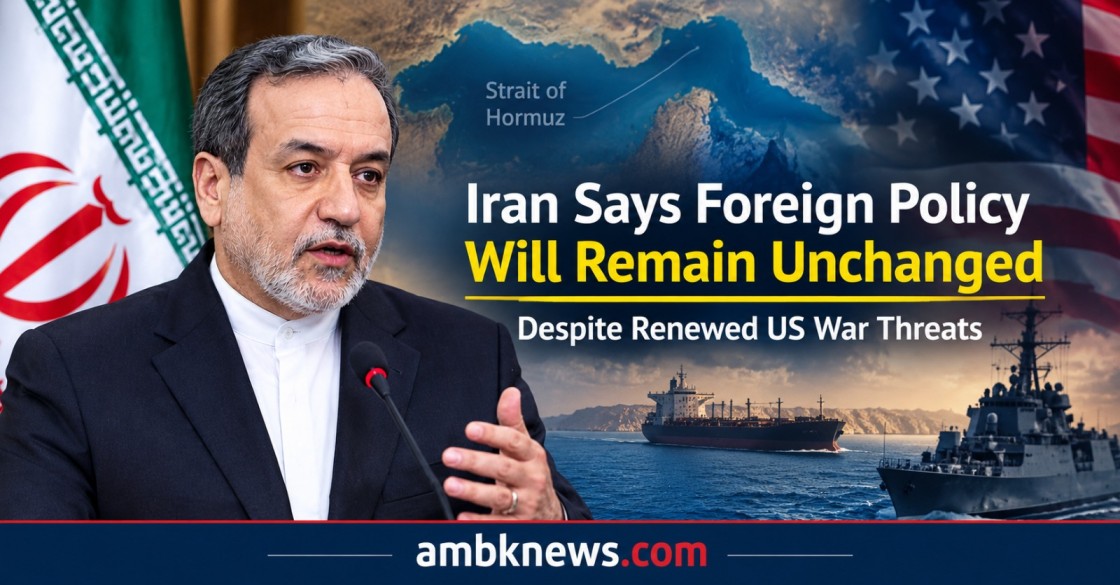
Iranian Foreign Minister Abbas Araghchi has said the country will continue following its existing policies even if another military conflict breaks out, warning that renewed military action against Tehran would be an irrational move. His remarks were reported by Iranian news agency ISNA.
Araghchi made the comments during the inauguration of the Martyr Seyyed Kamal Kharrazi Documentation Centre and Museum at Iran's Ministry of Foreign Affairs. The event also included a specialised meeting examining Kharrazi's contribution to foreign policy consensus and the opening of a dedicated library.
Iran Says Its Policies Will Not Change
Addressing discussions about the possibility of another war, Araghchi said Iran would maintain its current approach regardless of developments on the military front.
He argued that the regional security environment had undergone significant changes following what he described as a 40-day war. According to the minister, the conflict had fundamentally altered the circumstances surrounding regional security and international relations.
Araghchi also said the Strait of Hormuz would not return to its previous condition after the conflict, suggesting that the strategic waterway and the wider regional security framework had been affected by the fighting.
Describing the conflict as the "Ramadan War", he called it a turning point in the region's history. He further argued that any eventual settlement should address all fronts rather than focus on only one part of the conflict.
Iranian Minister Makes Claims About US Military Losses
Araghchi claimed that Iranian forces had destroyed more than 80 American aircraft and fighter jets during the conflict.
According to his account, nearly all the aircraft were struck by missiles while they were on the ground. He also alleged that almost all US military bases across the region had sustained serious damage, with hundreds of buildings destroyed.
These figures and damage assessments were reported by ISNA as claims made by the Iranian foreign minister. They have not been independently verified in the information available for this report.
Trump Leaves Possibility of Further Military Action Open
Araghchi's comments come as speculation continues over the possibility of renewed US military action against Iran.
US President Donald Trump, speaking to reporters after voting in Florida, said an attack on Iran remained a possibility. However, he also indicated that an agreement with Tehran could still be reached.
Trump questioned whether Iran would comply with any potential agreement, reflecting continuing uncertainty over the prospects for diplomatic negotiations.
The US president also praised the performance of American military forces and made claims about the damage inflicted on Iran's military capabilities and naval assets.
The remarks highlight the continued uncertainty surrounding relations between Washington and Tehran, with both military escalation and diplomacy remaining possible outcomes.
Iran Denies Offering to Reopen Strait of Hormuz
Iran has also rejected reports that it proposed reopening the Strait of Hormuz in exchange for the lifting of a US naval blockade.
The IRGC-affiliated Tasnim news agency, citing sources, reported that Tehran had not submitted any new proposal to Pakistani mediators.
The agency described reports of an offer involving the reopening of the strategic waterway as fabricated. The claims had previously appeared in a Saudi Arabian media outlet, according to Press TV.
The Strait of Hormuz remains a central issue in the wider regional situation because of its strategic importance to maritime transport and energy supplies.
With Tehran insisting that its policies will remain unchanged and Washington keeping the possibility of military action open, the situation continues to be marked by uncertainty over the next steps in the conflict and the prospects for a negotiated settlement.