Nuclear Energy to Power India’s AI Future: Jitendra Singh
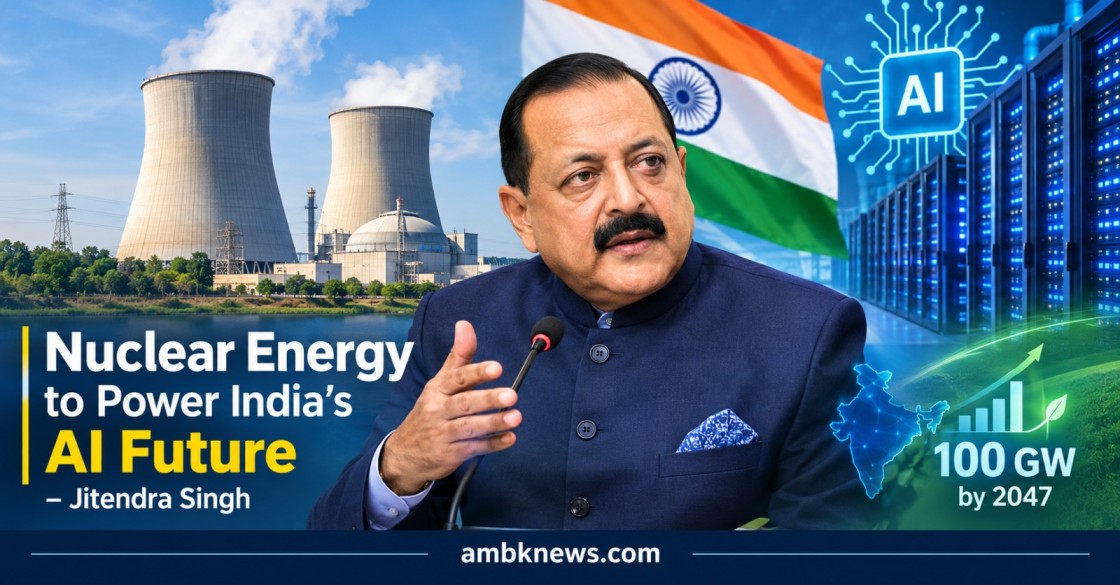
India is looking to nuclear energy as a key source of reliable electricity for its technology-driven economy, with Union Minister Jitendra Singh highlighting the growing power requirements of artificial intelligence (AI) and data centres. He also reiterated that the country's nuclear programme remains focused on peaceful applications and national development.
Speaking on the sidelines of the Bloomberg Economy Forum 2026, Singh said the vision of Dr. Homi Bhabha, the architect of India's nuclear programme, continues to shape the country's approach to nuclear technology and its role in development.
India targets 100 GW of nuclear capacity by 2047
Singh connected the expansion of nuclear power with India's long-term energy and climate ambitions. The country aims to reach 100 gigawatts (GW) of nuclear power capacity by 2047 and achieve net-zero emissions by 2070.
Nuclear energy can complement other electricity sources by providing a dependable supply of low-carbon power. Such reliability is particularly important as electricity demand rises and the country works towards a cleaner and more resilient energy system.
AI and data centres need dependable electricity
The growing use of AI is creating new demands on power infrastructure. Data centres and AI computing systems require substantial amounts of electricity, making a consistent and reliable power supply increasingly important.
According to Singh, dependable energy infrastructure will be essential for supporting India's ambitions in emerging technologies. Nuclear power could form part of the wider energy mix needed to support this growth.
Singh stresses responsible use of artificial intelligence
Beyond energy, the Minister highlighted AI's potential applications across different fields, including space technology and life sciences. He also emphasised that people must exercise sound judgement when using AI tools.
“One has to be intelligent enough to use Artificial Intelligence,” Singh said.
He noted that although AI offers considerable opportunities, preventing its misuse remains an important challenge. Regulation has a role to play, but Singh also underlined the importance of integrity at both the individual and national levels.
Private participation to support technological growth
Singh also pointed to the government's decision to open critical and sensitive sectors to non-government players. Greater participation from private industry, he said, creates opportunities to contribute to innovation, technological progress and national development.
The broader message is that India's future growth will depend on several factors working together: reliable electricity, the responsible adoption of emerging technologies and increased participation from private enterprises.
As AI applications and data centre infrastructure expand, nuclear energy is expected to remain an important part of the discussion around India's long-term power needs and development goals.